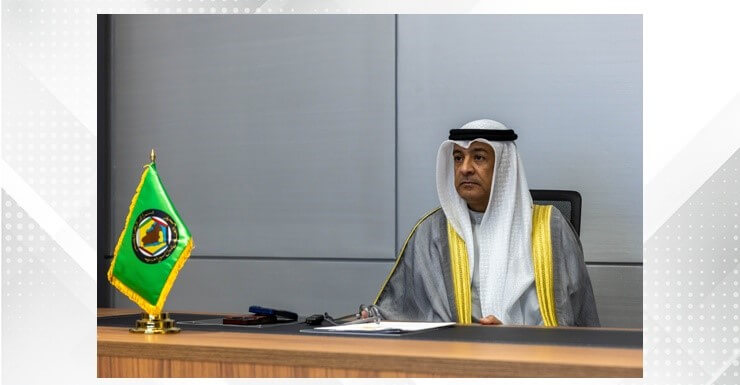
MANAMA: Jasem Mohamed Albudaiwi, Secretary General of the Gulf Cooperation Council (GCC), held a meeting via video conference on a political initiative titled “Supporting Food Security and Access to Fertilisers”.
The meeting was attended by Antonio Tajani, Deputy Prime Minister and Minister of Foreign Affairs of Italy, and Gordan Grlić Radman, Minister of Foreign and European Affairs of Croatia and current chair of the Mediterranean Group.
Albudaiwi said that GCC countries activated alternative logistics routes and redirected shipments from Arabian Gulf ports to ports on the Red Sea and the Arabian Sea to protect supply chains and maintain the uninterrupted flow of essential goods.
The measures were supported by customs and logistics facilitation arrangements aimed at sustaining global supplies of energy and fertilisers amid the current circumstances.
The GCC Secretary General said the meeting was taking place at a critical time amid the Iranian attacks targeting GCC countries and Iran’s continued disruption of navigation through the Strait of Hormuz, which he said exposed the direct link between regional security and global food security.
Albudaiwi said Iran and affiliated groups had launched around 7,000 ballistic missile and drone attacks against GCC countries over 45 consecutive days since February 28, 2026, targeting civilian facilities, infrastructure, and oil and gas installations.
He said the attacks caused deaths, major material damage, and disruption to global energy markets and supply chains, particularly food commodities and agricultural fertilisers.
Albudaiwi said the Iranian attacks against GCC sovereignty, along with the disruption of maritime navigation and the closure of the Strait of Hormuz, amounted to global coercion and violated the 1982 United Nations Convention on the Law of the Sea, international law, and the Charter of the United Nations.
He welcomed the adoption of United Nations Security Council Resolution 2817, which condemned the attacks, called for their immediate cessation, and urged against threats to maritime navigation in the Arabian Gulf, the Strait of Hormuz, and surrounding waters, noting that Iran has yet to comply with the resolution.
The GCC Secretary-General warned that the disruption to maritime navigation was affecting the global economy, citing shortages in oil, gas, petrochemical products, and agricultural fertilisers, as well as a 30% to 40% increase in urea prices.
He said the situation posed a direct threat to global food security, particularly for developing countries dependent on imported energy and food supplies while already facing inflationary pressures and sovereign debt burdens.
Albudaiwi said several countries had introduced emergency economic measures to limit the impact of the crisis, stressing that the challenges require coordinated international action to stabilise prices and strengthen logistics coordination to ensure uninterrupted flows of essential goods.
He added that the meeting provided an opportunity to turn discussions into practical initiatives that strengthen cooperation among participating countries and support regional and international stability.
Albudaiwi stressed that dialogue and diplomacy remain the best means of resolving crises, while underscoring the need for Iran to respect the sovereignty of neighbouring countries and refrain from interfering in the internal affairs of GCC states.
He also called for all necessary measures to safeguard supply chains, maintain international maritime navigation, and support global food security, stressing the need to end Iranian attacks on GCC territories, ports, and interests in the Arabian Gulf and prevent any recurrence.
Albudaiwi further underscored the importance of protecting maritime corridors and ensuring uninterrupted international navigation, particularly through the Strait of Hormuz and Bab al-Mandeb, describing maritime and regional security as essential pillars of international peace and security.
He concluded by stressing the importance of adherence to international law and stronger international cooperation to protect energy security, supply chains, and freedom of navigation in accordance with international resolutions and treaties.


GCC adopts alternative route for food security