

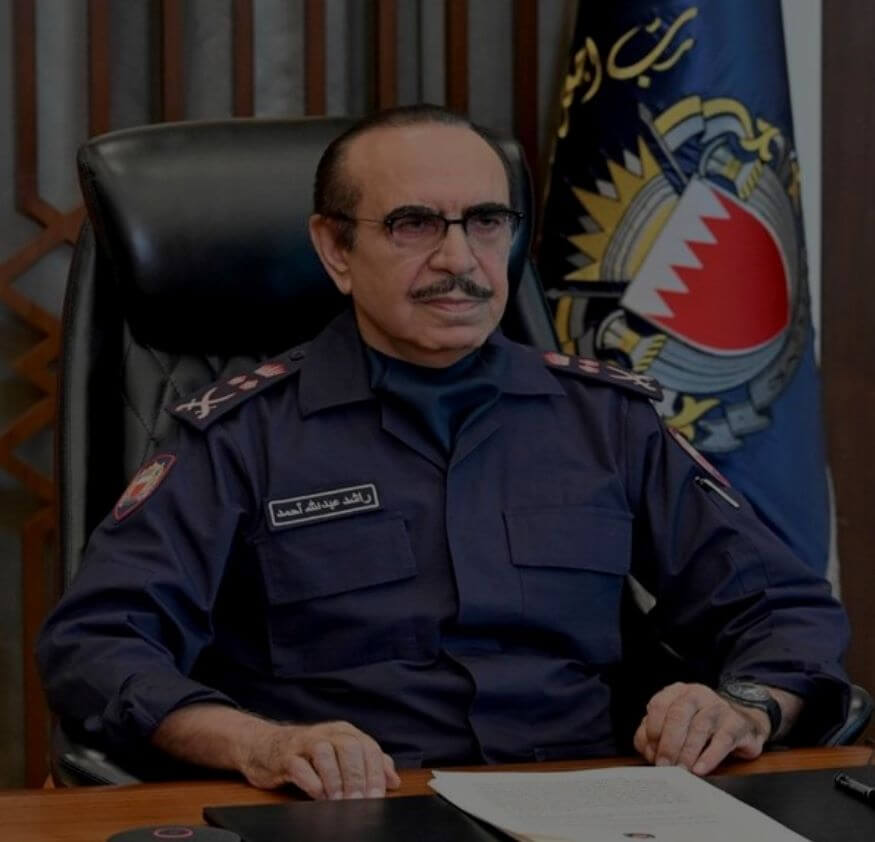
MANAMA: Mahmood Rafique, Editor: National unity around the leadership of HM the King serves as a key and remains a cornerstone of the Kingdom’s cohesion that ensures our national stability.
HE Interior Minister, while addressing the Arab Interior Ministers Council meeting reiterated that Bahrain stands firm in the defence of its sovereignty, citizens and residents, thanks to the wisdom and leadership of HM the King.
HE Interior Minister commended firm and comprehensive measures taken by the government, under the leadership of HRH the Crown Prince and Prime Minister, in addressing the repercussions of the Iranian aggression.
Interior Ministry activated its crisis management plans, transitioning from routine procedures to the immediate implementation of approved plans within a record time.
We, HE said, maintained our position of not being drawn into a war in which we are not a party.
The Interior Ministry’s efforts focused on protecting lives and property, and Civil Defence and National Ambulance personnel worked around the clock to address the repercussions of the aggression.
The Arab Interior Ministers Council faces a major challenge imposed by the repercussions of the war on our countries. This requires us to increase cooperation and coordination to protect our internal front and strengthen our joint security measures.
Continuing to develop mechanisms for cooperation and coordination among us is inevitable, reflecting our shared goal and common destiny.
I extend my thanks and appreciation to the Interior Ministers who called and expressed their support for the Kingdom of Bahrain.
The Arab Interior Ministers Council condemned Iranian aggression and targeting of civilian locations and infrastructure, which endangers civilian lives.
The Council affirms its full support for Arab states in confronting ongoing Iranian aggression and its complete support of the measures they are taking to safeguard their security and stability.
His Excellency Interior Minister General Shaikh Rashid bin Abdullah Al Khalifa, chaired the delegation of the Kingdom of Bahrain at the meeting of the forty-third session of the Arab Interior Ministers Council, which was held on Wednesday via video conference, in light of extremely complex regional circumstances, and the heinous Iranian aggression witnessed by the Gulf Cooperation Council countries, which is condemned by all international charters and humanitarian laws.
Following are the key points of HE Interior Minister’s speech:
“At the outset of my remarks, I would like to express my gratitude to my brother, His Excellency, the First Deputy Prime Minister and Minister of Interior of Kuwait, Sheikh Fahad Yusuf Saud Al-Sabah, the Chairman of the previous session, for his successful efforts that contributed to strengthening security cooperation among the council’s states.
“I would also like to thank Dr. Mohammed bin Ali Koman, Secretary-General of Arab Interior Ministers Council, and the General Secretariat for their excellent preparation and follow-up of this meeting, which comes at a time when the GCC states and the brotherly Jordan are facing blatant and unjustified Iranian aggression, with missiles and guided drones, which constitutes a flagrant violation of the sovereignty and stability of our countries and transgresses international and humanitarian norms and conventions.
“Bahrain, with God’s help, is steadfast and unwavering in the defence of its sovereignty and of its citizens and residents on its land, thanks to the wisdom and leadership of His Majesty King Hamad bin Isa Al Khalifa, the Supreme Commander of the Armed Forces. The national unity around the leadership of HM the King is the cornerstone of our cohesion that achieves for us the strength of national stability, noting the decisive and comprehensive measures taken by the esteemed government led by His Royal Highness Prince Salman bin Hamad Al Khalifa, the Crown Prince and Prime Minister, in dealing with the repercussions of the heinous Iranian aggression.
“Since the beginning of the aggression on February 28, the valiant air defence systems of the Bahrain Defence Force have been engaged in intercepting Iranian missiles and drones. The Interior Ministry also activated its crisis management plans, transitioning from routine procedures to the immediate implementation of approved plans. Within a record time, the repercussions of this heinous attack were addressed. The attack resulted in martyrdom and injury of several citizens and residents, terrorised innocent civilians, and targeted vital infrastructure and civilian sites, including airports, residential areas, energy, water, and electricity facilities, and vital economic projects. All this occurred while we maintained our position for not being dragged into a war in which we are not a party.
The Interior Ministry’s efforts focused on protecting lives and property. Civil Defence and National Ambulance personnel worked around the clock to counter the repercussions of the Iranian aggression. The Civil Defence Council decided to strengthen civil protection measures as part of its commitment to engaging with all segments of society. Believing in the importance of maintaining a cohesive internal front, the Interior Ministry worked to enhance communication with all segments of society and reassure citizens and residents of all nationalities, using multiple languages as part of its security awareness campaigns.
“The Arab Interior Ministers Council face a major challenge posed by the repercussions of the war waged on our countries today. “This requires us to enhance cooperation and coordination to protect our internal front and strengthen our joint security measures, an objective we aspire to achieve. This makes the continued development of cooperation and coordination mechanisms among us imperative, reflecting our shared goal and common destiny.
“I extend my thanks and appreciation to the Interior Ministers who called and expressed their support for the Kingdom of Bahrain. I wish the Council every success and hope it will yield results that strengthen stability and bolster security.
The meeting’s agenda included several aspects of security cooperation within the framework of joint Arab action, recommendations issued by meetings held within the General Secretariat, and the outcomes of joint meetings with Arab and international entities. Among the agenda topics were the Secretary-General’s report on the General Secretariat’s work between the previous and current sessions, and the draft of the second phase of the revised Arab strategy for combating terrorism. Before the session, a preparatory meeting was held and attended by the Undersecretaries of the Interior Ministries of the member states.
