

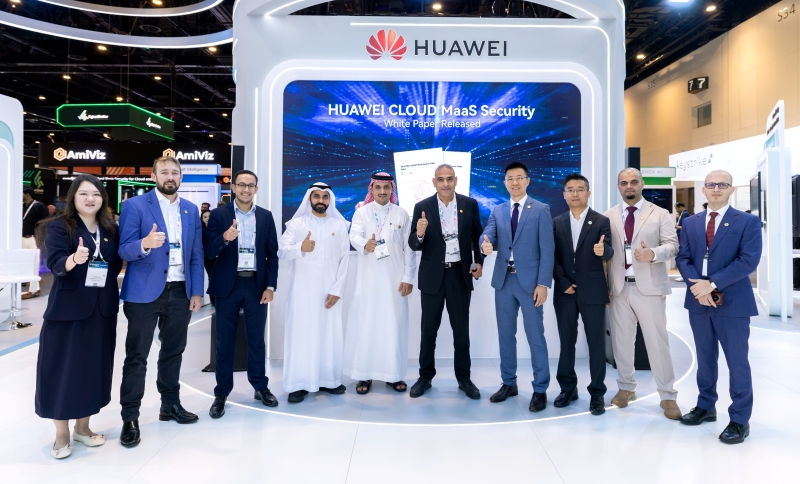
Dubai, UAE: Huawei has launched its HUAWEI CLOUD MaaS Security Whitepaper on, accountability and effective oversight. The whitepaper addresses these priorities through a shared-responsibility model and security measures spanning the MaaS service lifecycle.
Security, stability, and quality are Huawei Cloud’s top priorities. The whitepaper emphasizes that security must now cover the entire service chain, from computing infrastructure to Agent applications. Central to this framework is a shared-responsibility model where Huawei Cloud secures the cloud and managed MaaS services, while clients take responsibility for the security of content they configure, upload, develop and consume on the MaaS platform.
Built on this foundation, the whitepaper sets out five areas of protection: data, model, content, application and operations security, and describes how Huawei embeds these into a DevSecOps pipeline that shifts security controls early into model and application development. This approach provides practical guidance for practitioners and regulators on data protection and lifecycle management, robust access control for multi-tenant environments, and specialized security for models and Agents to defend against AI-specific risks. It further outlines a systematic regime for continuous monitoring and incident response, ensuring that AI governance remains proactive and traceable throughout its operational life.
“The new digital order is changing the conventional norms of cybersecurity. As AI becomes embedded in critical operations across the region’s banks, government services and enterprises, security must evolve beyond protecting infrastructure to governing the models and Agents built on top of it. This whitepaper sets out Huawei Cloud’s approach to securing MaaS services, and the measures customers can take to protect their applications throughout the lifecycle,” Alan Qi, President of Huawei Cloud Middle East & Central Asia, said.
